
Expert Roof Leak Repair
Services in Springfield
& Branson, MO
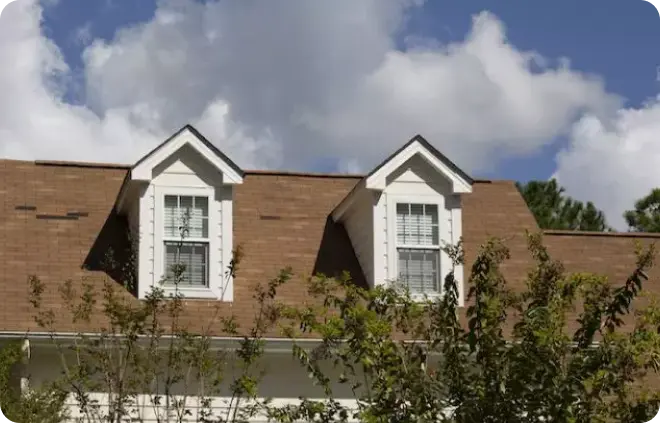
3-tab roof with missing shingles from wind damage. Insurance paid for the whole roof after the third inspection.
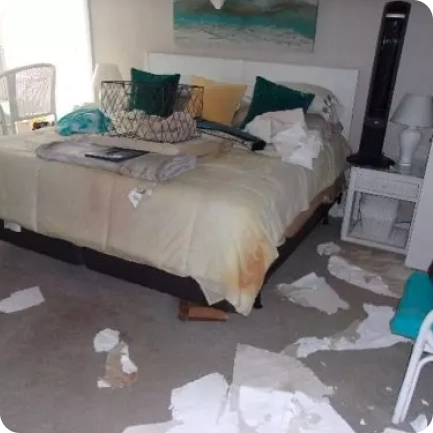
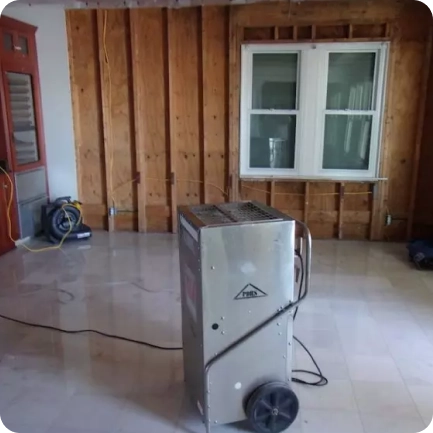
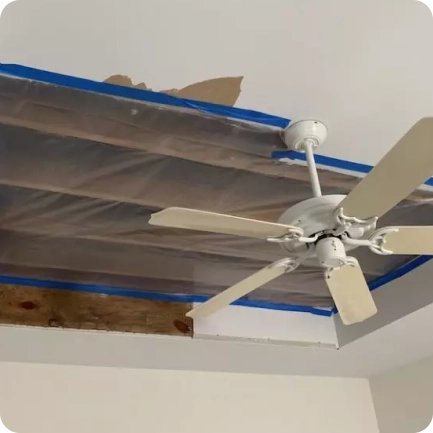
A leaking roof is rarely a temporary issue, by the time you see a water spot on your ceiling. Usually, it’s an indication that water had found a way through the roof covering, through the plywood decking, and possibly saturated insulation, dripped enough onto the drywall to soak through, and finally discolor the cardboard through the paint. It’s important to get this problem resolved as soon as possible. Otherwise, wood starts to swell, rot, drywall deteriorates, mold and mildew can start to grow, and what might have been a simple patch or caulking can become major restoration.
Contact your trusted local roofing company in Springfield, MO and Branson today, using the form on the right, or call us at 417-334-4238.
Here’s some more information about roof leaks.
Do You Need Roof Insurance Claims Help?
Have you recently experienced hail damage? You are not alone. Many homeowners struggle with storm-related damaged to their roof and are not aware of the help that is available. At Cook Roofing Company, we take your roof seriously. That means that when it comes to seeking out financial coverage for your insurance claim, we can help. Our qualified assistance has helped many customers get the help they are entitled to for their roof. Please don’t hesitate to give us a call at (417) 334-4238 for your roof insurance claim in Springfield MO and Branson. We have the responsibility and integrity to handle all such important matters.
Cook Roofing Company has plenty of experience tracing and finding roof leaks. We can determine whether the leak is from something simple, how easy it will be to repair the leak, and whether storm damage might have caused the leak. If it was a storm, your insurance may provide coverage. Depending on the extent of the damage, you might be owed a new roof. Wouldn’t you rather put your money towards the deductible on a new roof, than spend it on a patch? Contact us today for a free roof evaluation and estimate. We’ll help you understand the extent of the damage, and how best to proceed. We offer an Apples to Apples price match guarantee and a lifetime workmanship warranty on our new roofs. We can also meet your adjuster and help you understand the insurance claim process, if you have storm damage.

How Roof Leaks
Affect Your Home
Roof leaks can emerge for a number of reasons. One homeowner had a squirrel who developed a taste for the pipe jack flashing on his roof. That was a pretty simple fix, though he needed a fair bit of sealant and painting inside.

Caulking or Asphalt Deterioration
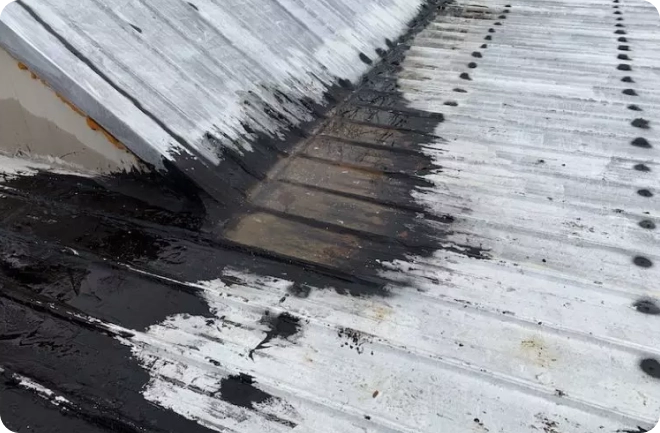
A common source of leaks is caulking or rubber components that start to let water in. Any time asphalt or rubber is exposed to UV light from the sun, it starts to fade and deteriorate. Then it can start cracking, and let water through. Metal roof fasteners have rubber grommets that can eventually deteriorate and leak. In one photo below, you can see black spots where the owner tried to seal the exposed fasteners. Note that this metal roof had already been coated with silicone. And it was still leaking. We did not do any of the work shown in any of these photos, by the way.
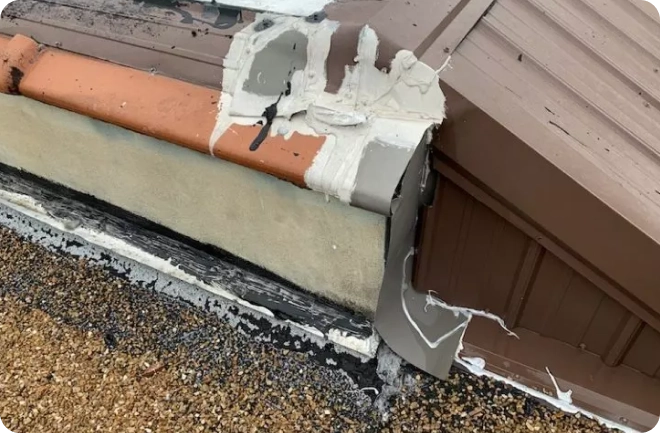
- Gooping on caulking to fix bad flashing is just a temporary fix at best. And on the right we have a metal roof that was too shallow of a slope to start with for exposed fasteners. It has an area where water cannot drain.
- It was coated with silicone, then with some kind of tar or asphalt sealant. And finally they used expanding foam for the edges of the metal roof on the gable. We’re not sure which local springfield mo roofer did this work, but hopefully we can fix it.
- UV protection is the reason that asphalt shingles are covered with granules. Those little rocks are not just for decoration – they hide the asphalt in the shingles from the sun. Over time, the granules come off from rain, foot traffic, really anything that touches them.
- As a roof gets older, the asphalt they are embedded in doesn’t hold them as well and they will come off easily. The sun gets through to the shingle base, deteriorates it more, the shingles get brittle… this is why shingle roofs eventually need to be replaced in 12-20 years.
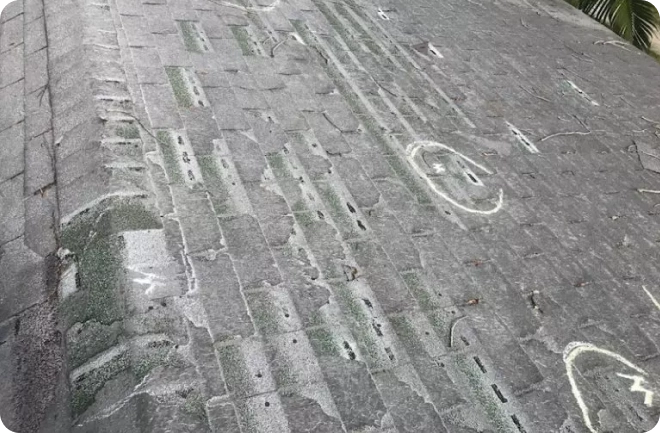
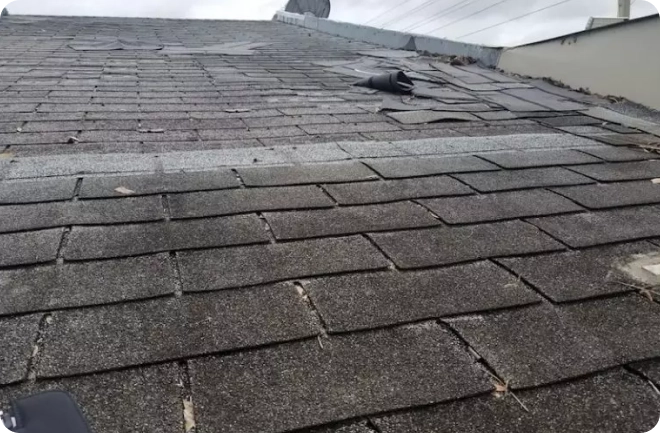
Badly worn shingles with missing tabs, and missing shingles. The first one was in bad shape, and his policy had a high deductible because of this. The second photo had two layers of shingles. Insurance bought both of these roofs.
Heat Damage From Improper Ventilation
Sometimes this deterioration happens much more quickly, though. A roof without proper ventilation allows the shingles to overheat. If the roof is overheated, and cools suddenly from rain, it causes even more stress on the roof. In the Springfield, MO area, the sudden thunderstorms do this a lot. Over time, this can prematurely age the roof. That’s why a “30 year shingle” might only last 10-12 years.
Hail Damage
A common source of leaks is caulking or rubber components that start to let water in. Any time asphalt or rubber is exposed to UV light from the sun, it starts to fade and deteriorate. Then it can start cracking, and let water through. Metal roof fasteners have rubber grommets that can eventually deteriorate and leak. In one photo below, you can see black spots where the owner tried to seal the exposed fasteners. Note that this metal roof had already been coated with silicone. And it was still leaking. We did not do any of the work shown in any of these photos, by the way.
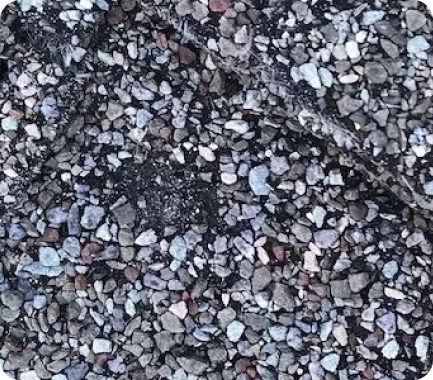
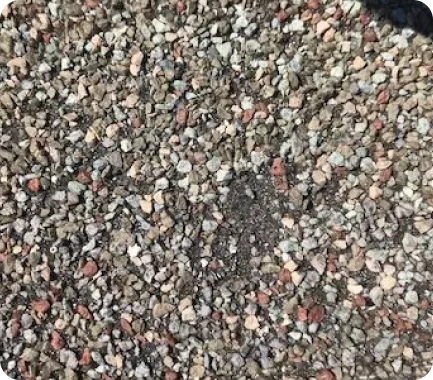
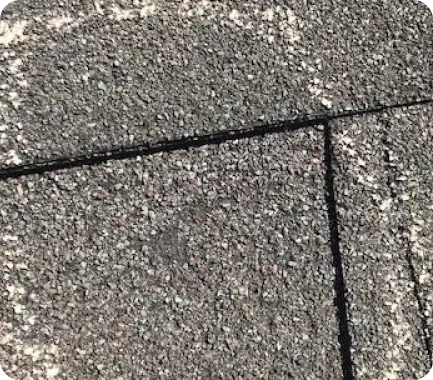
Hail damaged shingles showing bruising and where the granules are missing, from the impact.
Winds From Thunderstorm
Thunderstorms often come with wind, and we’re not even talking about tornadoes! The same wind that lifts 2 inch hailstones miles into the air, can cause wind gusts. It has to do with the warm moist air from the ground rising, cooling, and then the rain causing it to cool even more, that air rushes down and out, sometimes in “straight line winds.’ (If you’re interested in how this happens, there’s a better discussion here, and here. And even more detail about the science behind thunderstorm formation and wind shear here.)
Thunderstorms often come with wind, and we’re not even talking about tornadoes! The same wind that lifts 2 inch hailstones miles into the air, can cause wind gusts. It has to do with the warm moist air from the ground rising, cooling, and then the rain causing it to cool even more, that air rushes down and out, sometimes in “straight line winds.’ (If you’re interested in how this happens, there’s a better discussion here, and here. And even more detail about the science behind thunderstorm formation and wind shear here.)
Some of the damage that wind causes is obvious, and some is harder to spot. Here are a few different types below.
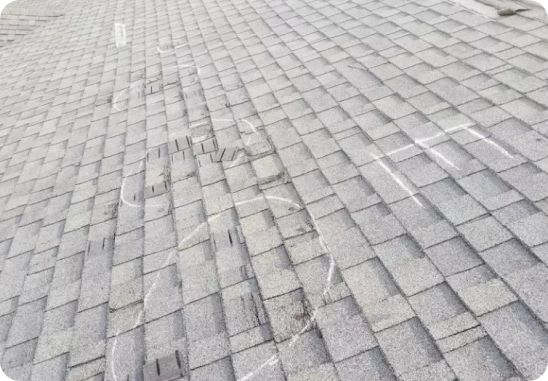
Missing Shingles
Other times, shingles get completely pulled out from under other shingles, or ridge cap shingles get blown off. While missing tabs look bad, and can allow water underneath shingles, completely missing shingles almost always let water through. Plywood and felt underlayment with nails through it is not waterproof. It helps to shed water, more than if there was nothing… but if there’s no shingle over it, the roof is almost always leaking there.
Missing shingles and tabs ripped off of other shingles. And missing ridge cap shingles, blown off a plastic ridge vent.
Here’s some more information about roof leaks.
Missing Shingle Tabs
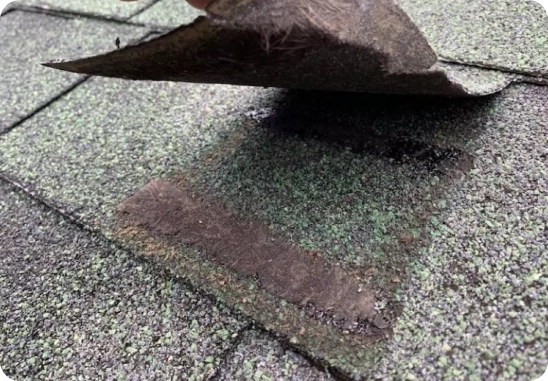
This is the easiest type of wind damage to spot. If wind separates the tabs from the mastic strip underneath (the heat-activated adhesive strip that glues the overlapping tabs to the shingle below), then wind can fold those tabs back, and rip them off. The thicker, newer, and more flexible the shingle, the less likely this is to happen. New shingles will fold back and return to their shape without much damage (though there may be creasing).
There were shingle tabs missing all over this roof, but no full missing shingles. Insurance paid for this roof.
Lifted Shingle Tabs
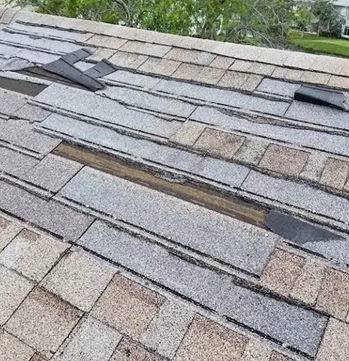
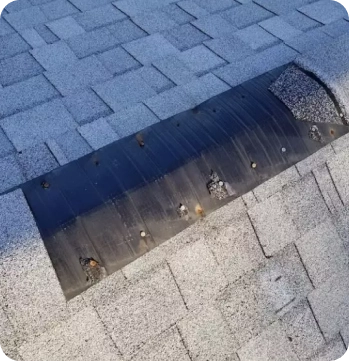
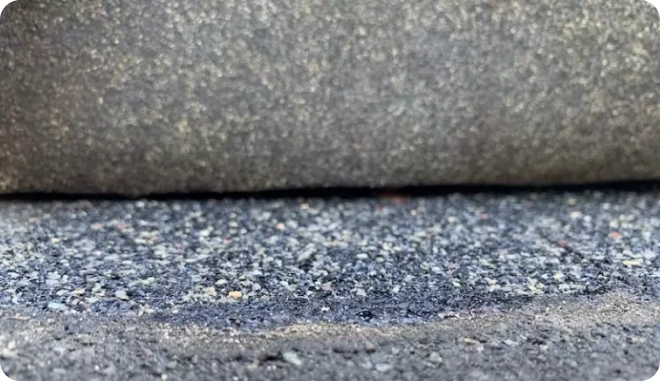
This is less obvious, and sometimes insurance companies don’t want to cover this damage. It’s true that if shingles lift, and then lay back down, they will usually seal again when the sun warms the roof up again. The exception here, though, is if there is debris and dirt stuck to the mastic strip, or if the mastic tore off some of the shingle material so that there is no sticky adhesive available. This is more common during hurricanes, because of the sustained high winds blowing debris under the shingles, but it can happen with thunderstorms, too. We’ve seen “lifted shingles” denied by insurance as a reason to buy the roof. Other times, the adjuster agreed that lifted shingles with debris stuck to the mastic strips was a valid reason to approve roof replacement.
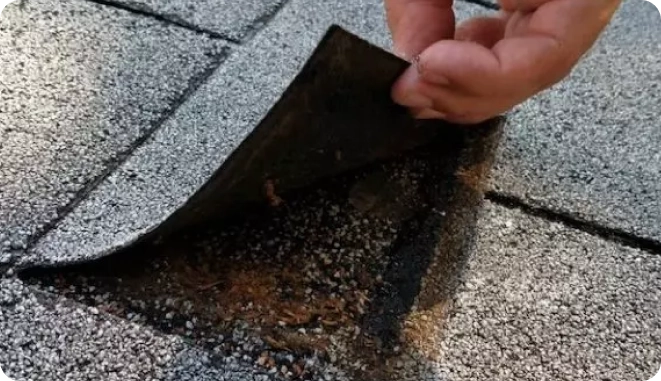
Mastic tore shingle and tabs were loose on the left. Repair just kept breaking more shingles. On the right, dirt is under the tabs stuck to the mastic, so the tabs would no longer seal. Insurance paid for each roof eventually, after reinspections.
Damaged Flashing
Free Lifetime Workmanship Warranty
We offer free lifetime workmanship warranties with every new roof installation, backed by decades of expertise.